The new AD5 competition for translators, with 1177 seats between 8 languages( English , French, Spanish, Maltese, Danish, Greek, Dutch and Italian) is here. You have until 14th January to apply. Do you want to know all the details about it? here you have our latest webinar where we explain it. (Spanish version available here)
After recording our webinar, EPSO informed (see picture below) the exams will take place in 2 different days during the same month (it could be a difference of 1 to 3 weeks). Without further official info, our bet is the first day, you will have to deal with reasoning tests (verbal, numerical and abstract), language knowledge test and comprehension test. During the second day, you will deal with translation and revision test. Check our webinar for further details
The tests – What is key?
The opportunity of this competition deserve we fight for it
Hard work. There are no shortcuts for this test. You need to master 3 languages and the vocabulary and writing style of the institutions, (here a tool «IATE» that can help you with the jargon). This means that you will have to master two levels of the language: formal or legal language and plain language, which should be understood by someone who doesn’t know anything about the EU (like this) .
Also, bear in mind that the tests will be held online and in principle all on the same day, so it’s good if you are ready to spend 198 min (+ breaks between exams) in front of your screen while working hard. Be sure you are in a good shape by them!
Examples of the tests for translators
Do yo want to see some examples to practice for free? Here you have some ideas:
Did you find them useful? Complete mock exams are also available:
YSE – AD5 TRANSLATORS – EXAM 1: L1 – English (reasoning and knowledge in English) / L2 – French or Spanish / L3 – French or Spanish (comprehension, translation and review) – Finished –
YSE – AD5 TRADUCTORES – EXAM 1: L1 – Español (razonamiento y conocimiento en español) / L2 – English o French / L3 – English or French(comprehension, translation and review) – book it via Teachable (here)
Do you know what? For your inconditional support, if you use the code «IAMACROQUETILLA» you will get a 10% discount when purchasing the mock exam.
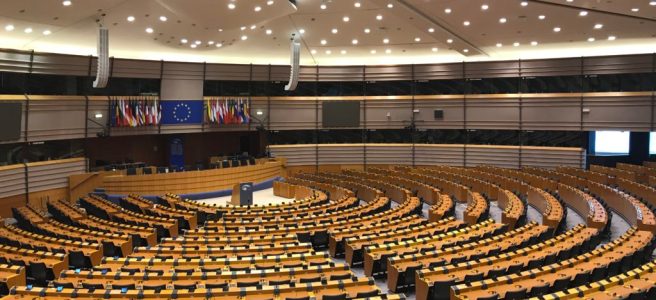
Some of you asked for advice on the Parliament competitions and how to handle the translation test, and of course we couldn’t ignore those requests, so here we are ready to help you with some free resources. The competition we are talking about is the following INTERCULTURAL AND LANGUAGE PROFESSIONAL (AD5)- PE/272/TRAD
On the left the place, on the right the possibilities, now it’s up to you to choose one
So you are willing to move to Luxembourg, and work as intercultural and language professionals. Wait, what the hell does a intercultural and language professional? Well, in a few words, a high specialized interpreter , in long see below
Now that we are on the good track, let’s clarify in which languages we are going to take the exams (adapted from the notice):
language 1: Bulgarian, French, Maltese, Slovak or Swedish. Any of them with perfect knowledge at mother-tongue level;
language 2:English or French, thorough knowledge (minimum C1 level); If your language 1 is French then your language 2 must be English;
language 3: one of the 24 official languages of the EU -(minimum C1 level); NOT language 1, NOT language 2.
So you have more than 220 combinations to choose : BG-EN-ES ; BG-FR-IT; FR-EN-DE and so on….
ABOUT THE APPLICATION – What are the criteria to be a candidate?
The first thing that you should do is to read the application guide offered by the European Parliament, let’s assume you have read it but still are interested in reading our post :-). The criteria for being a candidate are :
In this competition, the usual general criteria apply: Enjoy full rights as a citizen of one of the 27 Member States of the EU (UK is no longer an option), meet any obligations under national laws on military service, and meet the character requirements for the duties concerned.
You are also required to hold a university degree of at least 3 years duration and the languages mentioned above. Better if it is a degree in relation with the tasks of the job.
YAY! You don’t need any professional experience, this is an AD5 and you can be a fresh graduate from university to participate in this competition. Nevertheless, any professional experience you have acquired exclusively by working in your language 1 in the area covered by this competition would be an advantage.
What are the competition phases?
Based on the notice of competition + our experience we split the process in 3 phases: 1) fill in the application, 2) Talent Screener evaluation 3) the Assessment Centre. The celebration after you have passed the competition is up to you.
Phase 1 – Fill in the Application
You will need to upload the supporting documents required with the initial application
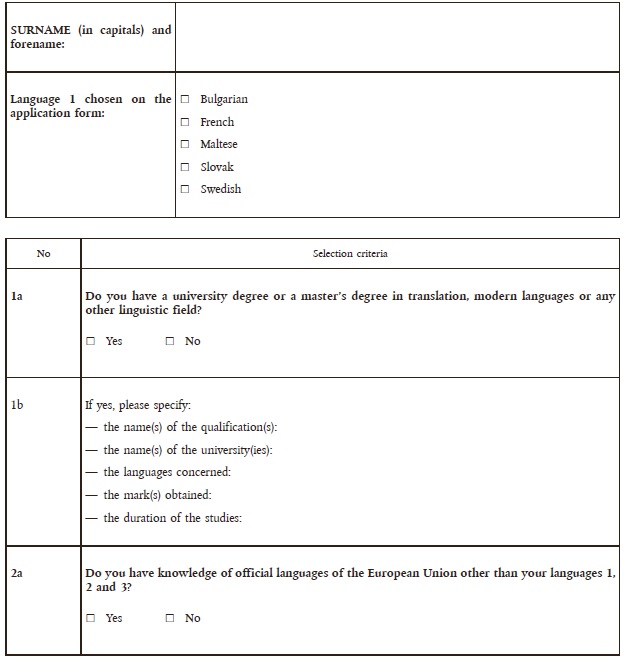
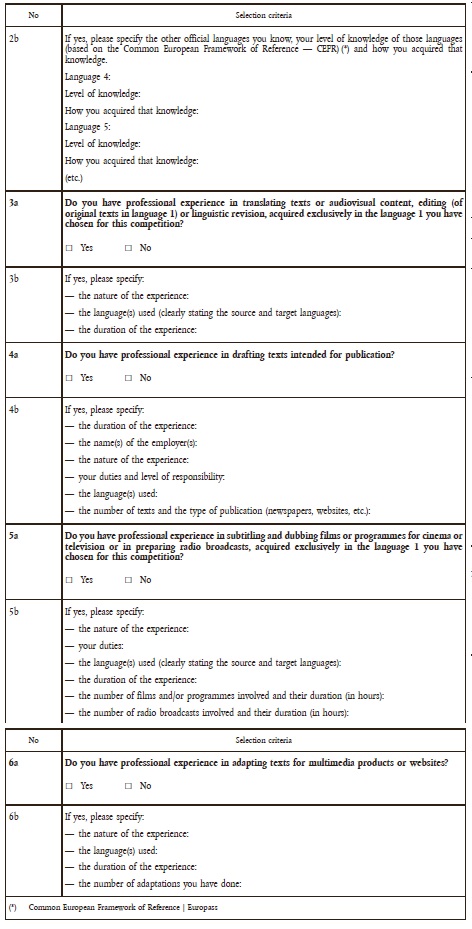
You’ve got until 25 August (17h) to send your application and before that, fill it in with love and care. This is the first step of the process, and the moment to differentiate yourself from the other candidates and all their experience (if any). Be careful! you will need to upload the supporting documents required with the initial application. Last but not least, remember the Talent evaluatoris key … yes! the competition begins here!! (see in the gallery below the list of questions per field).
… (Wait! we are still in phase 1) What is a TALENT EVALUATOR? Well, do you remember the talent screener from regular EPSO competitions? It’s the same. The Talent Screener/evaluator is a set of questions related to your academic and professional background that you must answer in your application, you can find the questions at the end of the notice of competition. A couple of things to remember:
The board of the competition is in charge of evaluating the answers
Keep in mind that all candidates, independently of the languages chosen, answer the same questions
This way, the responses of all the candidates are structured in comparable manner, which allows the board to make an evaluation (as objective as such a type of test allows) of the compared merits of all the candidates. Remember to look at guide and the notice or the application form for all the details, and if you think we can be of help, check some of our past webinar where we focused on tips to fill in the Talent Screener for specialist competitions.
PHASE 2 – Test & Talent Screener evaluation.
First things first, all of you will face an initial test. You will be invited to take the pre-selection test in the form of a set of computer-based questionnaire of a maximum of 40 questions intended to assess your ability to identify information relating to the values of the European Union and the role of the European Parliament. According to the notice, you will be sent sample questions in good time prior to the date of the test to see what you have to pass and in the meantime, we can suggest you to study the European Parliament factsheets.
This are not the requirements for the latest videogame but to take the test relating to the values of the European Union and the role of the European Parliament.
If you are among the best candidates in the test, they will take up to 150 highest-scoring candidates per language, then the selection board will assess your answers in the talent evaluator and admit the 60 best candidates per language of the competition to the written tests. We remind you that the selection based on qualifications will be carried out using solely the information provided in this Talent evaluation section (in language 2) WITHOUT cross-checking with the rest of your application. You should therefore include all relevant information in your answers, even if already mentioned in other sections of your application form. The best of all this is, after the evaluations, only up to 5 times the openings will go to the final test.
Phase 3 – Final Test.
Congrats! You are one of the candidates with the highest marks in the initial test and in the Talent evaluation and you have been invited to the final test.
Within this final phase, and we face 2 rounds. In the first round you will encounter 3 tests: Translation of a text connected with the legislative activities; Translation of a speech; Drafting test (see below for further detail)
Then, the 24 best out of 60 in the written part will go the oral test. It will consist in two interviews . First, typical field related interview for 45 minutes in languages 1 and 2 to assess your suitability to perform the duties outlined in the ‘Job description’ in a European institution, taking account of all the information contained in your application file (yes! they will use your application). After this a group discussion (if the exam is done in physical presence) or role-play (more aligned with online requirements) exercise in language 2 to enable the selection board to assess your adaptability, negotiating and decision-making skills and performance in a group. Once all this is done, you get a nice score and enter in the reserve list of this competition, congratulations!!!!!!
Wait… how can I pass all the tests you have mentioned above? Well, on the oral part of the competition, we can recommend you to check out ournext training sessions for the Assessment Centre (for both Parliament and Commission competitions). If interested in more info, news and updates on EPSO competitions and our trainings to pass the them, you canjoin our Telegram channel and if just seeking some tips for the translation part, keep reading.
The Translation test – What is key?
Hard work. There are no shortcuts for this test. You need to master the vocabulary and writing style of the institution, particularly the Parliament (here a couple of examples: first example, second example-any of these reports). This means that you will have to master two levels of the language: formal or legal language and plain language, which should be understood by someone who doesn’t know anything about the EU (like this) .
Also, bear in mind that the tests will be held online and in principle all on the same day, so it’s good if you are ready to spend 240 min (+ breaks between exams) in front of your screen while working hard. Be sure you are in a good shape by them!
The tests
Three are the consecutive test will face
so, all the 3 tests (a,b,c) count equally and we can’t falter
Test A – Translation of a text connected with the legislative activities of the European Parliament from language 2 into language 1
Test B –Translation of a speech or a notice intended for citizens from language 3 into language 1
Test C – drafting of a clear-language text intended for citizens, in language 1, on the basis of a complex document in language 2. The objective of this test is to assess your knowledge of language 2 and your ability to identify essential ideas and summarise them in clear language in language 1..
Let’s go now test by test. We need to do well in all 3 of them, as only if we get the passing mark in test A will our test B will be reviewed, and so happens for B with C. The 20 candidates who obtain the highest number of points in the written tests (A+B+C) will be invited to the oral tests, provided that they have achieved the pass mark in all of the written tests (i.e. you can’t pass with 19/40 in one test -below passing mark even if you got a 40/40 in the other two tests, but you can pass with 20/40 in each test if 60 points is among the 20 highest scores), which are:
(a) Translation of a text connected with the legislative activities of the European Parliament from language 2 into language 1 . Time: 90 minutes for a text with a maximum of 450 words
A recommendation would be to practice with the Reform of the European Ombudsman’s Statute, you can divide it in two parts (it’s longer than 450 words) and you have it in Spanish ; French ;Italian ; German . Another example available in the 24 official languages are the Factsheets of the European Parliament as they cover a wide list of subjects and allow you to practice with some legal & policy terms. This test just implies translation, so any document from the institutions officially translated to our language 2 can help us as practice.
(b) Translation of a speech or a notice intended for citizens from language 3 into language 1 .Time: 90 minutes for a text with a maximum of 450-500 words
Now it’s time for speeches or similar documents presenting a less technical language than in the previous test. Here any official speech of the President of the Parliament could work to practice. If your language 3 is French or Italian, you can use European Parliament’s president site to practice. Moreover, of course, we can’t forget about the State of the Union 2021 (which you have it in the 24 official languages), or any SOTEU speech from previous years (here for instance 2020 and 2018). Finally, the documents about the Political priorities of the Commission or other similar documents can also help you practice for test B.
(c) Drafting test: drafting of a clear-language text intended for citizens, in language 1, on the basis of a complex document in language 2. Maximum time allowed: 60 minutes
Consider it as a token for good luck
The objective of this test is to assess your knowledge of language 2 and your ability to identify essential ideas and summarise them in clear language in language 1, so this is a tricky one, you need a complex document to practice. But what is considered to be a complex document? Something technical or on a subject not often seen in the media. For example, we propose the following report “The Use of SLAPPs to Silence Journalists, NGOs and Civil Society” from the European Parliament think tank. You can divide it into two parts, (the first from page 12 to 31 and the second from page 33 to 51), summarize each part, and then check your summary with the executive summary in ES, IT,FR , DE. Still, it is good if you can use even a more plain English when doing the summary. Another option would be the press release about any policy or political proposal, like this one for projects to decarbonise the economy
Imagine yourself there
That is it for now! All the best to all the candidates who will be reading this post and also to those who just came here just out of curiosity. We really hope it will be useful for you.
If you liked this post or considered it useful, don’t forget to click on «like». If interested in more info, news and updates on EPSO competitions and our trainings to pass the them, you can join our Telegram channel or check or register for our next training sessions for the Assessment Centre (for both Parliament and Commission competitions).
How much will my salary be? (bonus question)
As they indicate right at the beginning of the notice, recruitment will be at grade AD 5, first step, for which the basic salary is EUR 5.130,98 per month. This salary is subject to Community tax and to the other deductions provided for by the Staff Regulations of Officials of the European Union. It is exempt from national tax. The step at which the successful candidates are recruited may be adjusted in accordance with their professional experience. Moreover, in certain circumstances allowances will be paid in addition to the basic salary.
Some of you asked for advice on the Parliament competitions and how to handle the translation test, and of course we couldn’t ignore those request, so here we are ready to help you with some free resources. The competitions we are talking about are the following:
Both competitions will take place at the same time and will be evaluated with the same type of tests, so let’s give you some tips to pass them with honors. Before we continue, we should remember the languages in which we are taking the exams (adapted from the notice):
language 1: English;
language 2: one of the 24 official languages of the EU; NOT English;
language 3: one of the 24 official languages of the EU; NOT English, NOT language 2. .
What is key?
Hard work. There are no shortcuts for this test. You need to master the vocabulary and writing style of the institution, particularly the Parliament (here a couple of examples: first example, second example-any of these reports). This means that you will have to master two levels of the language: formal or legal language and plain language, which should be understood by someone who doesn’t know anything about the EU (like this) .
Also, to bear in mind that the tests will be held online and in principle all on the same day, so it’s good if you are ready to spend 240 min in front of your screen while working hard. Be sure you are in a good shape by them!
The test
Three are the consecutive test will face
so, all the 3 tests (a,b,c) count equally and we can’t falter
Test A – Translation of a text connected with the legislative activities of the European Parliament from language 2 into language 1 (English)
Test B -Translation of a speech or a notice intended for citizens from language 3 into language 1 (English)
Test C – Adaptation of a text into clear language: on the basis of a complex document written in language 2, draft a new text, in language 1 (English), which reflects the content of the original but in a style and register that make the gist of the text clear to citizens.
Let’s go now test by test. We need to do well in all 3 of them, as only if we get the passing mark in test A will our test B will be reviewed, and so happens for B with C. The 20 candidates who obtain the highest number of points in the written tests (A+B+C) will be invited to the oral tests, provided they have achieved the pass mark in all of the written tests (ie you can’t pass with 19/40 in one test -below passing mark even if you got a 40/40 in the other two test, but you can pass with 20/40 in each test if 60 points is among the 20 highest scores), which are:
(a) Translation of a text connected with the legislative activities of the European Parliament from language 2 into language 1 (English). Time 90 minutes for a text with a maximum of 450 words
A nice proposal would be to practice with the Reform of the European Ombudsman’s Statute, you can divide it in two parts (it’s longer than 450 words) and you have it in Spanish ; French ;Italian ; German . Another example available in the 24 official languages are the Factsheets of the European Parliament as they cover a wide list of subjects and allow you to practice with some legal & policy terms. This test just implies translation, so any document from the institutions officially translated to our language 2 can help us as practice.
(b) Translation of a speech or a notice intended for citizens from language 3 into language 1 (English).Time 90 minutes for a text with a maximum of 450 words
Now it’s time for speeches, or similar documents presenting a less technical language than in the previous test. Here any official speech of the President of the Parliament could work. If your language 3 is French or Italian, you can use European Parliament’s president site to practice. Moreover, of course, we can’t forget about the State of the Union 2021 (which you have it in the 24 official languages), or any SOTEU speech from previous years (here for instance 2020 and 2018). Finally, the documents about the Political priorities of the Commission or other similar documents can also help you practice for test B.
(c) Adaptation of a text into clear language: on the basis of a complex document written in language 2, draft a new text, in language 1 (English), which reflects the content of the original but in a style and register that make the gist of the text clear to citizens. Maximum time allowed: 60 minutes
Consider it as a token for good luck
This is a tricky one, you need a complex document to practice. But what is considered to be a complex document? Something technical or on a subject not often seen in the media. For example, we propose the following report “The Use of SLAPPs to Silence Journalists, NGOs and Civil Society” from the European Parliament think tank. You can divide it into two parts, (the first from page 12 to 31 and the second from page 33 to 51), summarize each part, and then check your summary with the executive summary in ES, IT,FR , DE. Still, it is good if you can use even a more plain English when doing the summary. Another option would be the press release about any policy or political proposal, like this one for projects to decarbonise the economy
That is it for now! All the best to all the candidates who will be reading this post and also to those who just came here just out of curiosity. We really hope it will be useful for you.
If you liked this post or considered it useful, don’t forget to click on «like». If interested in more info, news and updates on EPSO competitions and our trainings to pass the them, you can join our Telegram channel or check or register for our next trainig sessions for the Assessment Centre (for both Parliament and Commission competitions).
Esta artículo fue publica en El Nuevo Federalista el 8 de Agosto de 2014
Estimado lector,
Soy consciente que en las fechas que nos encontramos usted se plantea muchas cosas, por ejemplo: a qué piscina ir, qué tapa tomar, si tinto de verano o cerveza y, en última posición, su curiosidad por conocer al nuevo electo presidente de la Comisión. Por eso visita esta página y por eso mismo, para ponerselo fácil, desde JEF-UEF y su publicación, el Nuevo Federalista-sección “Ya semos europeos..¡UE!”, hemos decidido ofrecerle nuestra guía de “Juncker para principiantes”, con cuya lectura confiamos salga refrescado, informado y en forma para afrontar victorioso cualquier tertulia de verano con los amigos. Bueno, vamos al relleno de la aceituna, ejem..al tema, así que nos van a permitir ponernos en su lugar y plantearnos las mismas dudas que a usted le asaltan y a las que daremos respuesta :
1.-Bueno este señor ¿quién es? ¿de dónde viene?
JEAN-CLAUDE JUNCKER, “juan“ o “juanito“ para los íntimos, nació en 1954, en el Gran Ducado de Luxemburgo; el segundo estado miembro más pequeño del UE (ejem…sobran comentarios) donde vivió y se crió felizmente. Como buen europeísta, su vida también quedó marcada por la guerra, en este caso a través de su padre, quien fue reclutado forzosamente para luchar en el ejército alemán durante la Segunda Guerra Mundial.
2.-Sí, pero ¿ tiene estudios?
A su manera tuvo su Erasmus: durante su juventud estudió en 3 países, ya que cursó la educación primaria en Belvaux (Luxemburgo), la secundaria en la población belga de Clairefontaine, para completar el bachillerato en la Ciudad de Luxemburgo. Finalmente, en 1975 se matriculó en la Facultad de Derecho (en Europa una de las carreras más difíciles) de la Universidad francesa de Estrasburgo, licenciándose en 1979, es decir, a curso por año, demostrando que el chaval estudiaba y de paso nos habla 5 idiomas.
3.- Vale, tonto no parece que sea pero ¿qué ha hecho desde el 79?
Efectivamente la fecha es lejana y ya desde entonces al Sr. Juncker (que no tenemos tanta confianza) le gustó lo de la política, en lugar de ponerse a ejercer en un bufete puso sus conocimientos jurídicos al servicio del Partido Popular Social Cristiano (CSV/PSC), y a la tierna edad de 28, allá por el 82, fue nombrado secretario de Estado de Trabajo y de la Seguridad Social. El chaval apuntaba maneras de político trabajador, tal es así que 2 años después le nombraron ministro de trabajo y en 1989 le sumó la cartera de Finanzas (algo que más adelante será clave, como veremos) con la que seguiría hasta 2009 (se ve que le gustó la cartera) y desde enero de 1995 y hasta diciembre 2013, casi 19 años, fue Primer ministro del Gran Ducado de Luxemburgo. En este período ganó tres elecciones generales consecutivas y encabezó cuatro gabinetes de coalición (con liberales o con socialistas, según saliese) así que algo bueno tenía que ser.
Resumidamente, su gestión fue liberal conservadora en lo económico y más progresista en la protección social (¡toma frase de tertulia!) y su mandato coincidió con varios años de envidiable prosperidad económica (Luxemburgo tenía la mayor renta per cápita de la UE) previamente a la llegada de la Gran Recesión que en Luxemburgo fue menos intensa que en otros países de la eurozona (sigue teniendo la mayor renta).
4.- Bueno, algo mal habrá hecho ¿no? ¿O es un santo?
Efectivamente también nuestro protagonista se vio salpicado por los escándalos, en particular, el que acabó con su posición de Primer ministro, cuando salió a la luz pública el escándalo de las escuchas a las primeras autoridades del país por parte del servicio secreto luxemburgués (sí, es así, nos sorprendió tanto como a usted ¡Luxemburgo tiene servicio secreto!). Un servicio, en teoría, bajo el control del propio Juncker, pero como se comprobó, andaban un poco descontrolados, hasta el punto que el propio Juncker acabó espiado. A pesar de esto, volvió a presentarse a las elecciones y fue el más votado pero no consiguió asociarse ni con los socialistas ni con los liberales, quienes se entendieron por su cuenta.
En otro ámbito, también resultó algo controvertida su defensa del secreto bancario y las ventajas fiscales y económicas del Gran Ducado, al punto de estar considerado un paraíso fiscal, pues a fin de cuentas, es de lo que vive el país (un cuarto de su economía es esto).
Ante las próximas elecciones, invitamos al lector a hace una pequeña reflexión para que vea como está en juego lo que realmente importa, las cosas de comer.
Permítame el lector comenzar con una disculpa, en tanto que europeísta, cargo con el pecado de “aburrido”, nos llenamos la boca de palabras, o palabrotas, europeas pensando que todo el mundo lo ve y entiende igual, ciertamente para usted, ciudadano con sus preocupaciones diarias, muchas veces el tema europeo ni le va ni le viene, con toda la razón, se lo hemos explicado fatal, así que me van a permitir que use el mecanismo más sofisticado que conozco para explicar porque le interesa votar el 25 de mayo, usaré LA PAELLA.
¿Cómo? muy sencillo, piensen en una familia de 28 miembros, los abuelos, tíos, padres, primos, etc. que se reúnen para comer paella ¿Qué harán? ¿Cada uno su paellera, su cazo de arroz, su bombona de butano, sus tropiezos? o ¿Una gran paellera donde se combinan todas las aportaciones? piense que cunde más y tendrán el lector los presupuestos comunitarios servidos y con ellos las políticas europeas, pues de eso se trata de hacer mejor algo juntos, que por separado saldría peor y/o más caro. Ahora bien, la paella hay que cocinarla ¿quién se encarga? pues como se trata de una paella muy grande vamos a necesitar 3 cocineros: el Chef-Comisión, el Chef-Consejo y el Chef-Parlamento. Los tres, en equipo, se encargarán de cocinar nuestra estupenda paella: el Consejo propone la receta y la Comisión la lleva a cabo, pero ¿qué pasa si a usted le gusta más “socarrat” el arroz? ¿O con más verdura? ¿O pollo? ¿Quién vigila que no se guarden parte del arroz o que no pongan todo el empeño en cocinar un buen plato? ¿Qué cocinero vigila que a usted se le oiga y se le haga caso? ¿Quién evita que el primo alemán imponga su receta? ese es el Parlamento Europeo.
Con su voto, usted le está diciendo al cocinero como le gusta la paella, como quiere que sea y lo que quiere que tenga, por supuesto con tantos comensales habrá que encontrar un punto intermedio, pero si quiere que lo suyo se tenga en cuenta, tendrá que hablar y se habla votando. Le propongo que busque los cocineros más serios, sus eurodiputados, aquellos cuyas propuestas realmente le sirvan al final su plato de paella que tanto merece usted, como ciudadano europeo y que toma la forma de políticas contra el desempleo, Erasmus, I+D, ayudas a la agricultura y pesca, fin del roaming en Europa, vuelos baratos. Y un largo etc.
Nota aclaratoria – este artículo se publico antes que el proyecto «Ya semos europeos ¡UE!» tuviera su forma definitiva y por la circunstancia de las elecciones , no tenía gracia publicarlo 2 meses después de las elecciones.








 Ya semos europeos